

Daj rajši zmoli očenaš za papeža, namesto da širiš mržnjo in sovraštvo.Zaradi resnice pa že ne
Lepote multikulturnosti 4
- Ustvarjalec teme Matey
- Začetni datum
Uporabljate neposodobljen brskalnik. Ta ali druga spletna stran morda ne bo prikazana pravilno.
Posodobite brskalnik ali uporabite alternativni brskalnik.
Posodobite brskalnik ali uporabite alternativni brskalnik.


Raje si zatiskajmo oči kdo je tukaj sovražen do koga.

Mhm.Raje si zatiskajmo oči kdo je tukaj sovražen do koga.

Ne privoščiš jim pridobitev kot so pravica do splava, pravica do istospolnih porok, pravica do prostovoljnega končanja življenja, pravica do biomedicinske oploditve. Zakaj tak egoizem?Včasih bi se še zgražal nad temi musli sodbami.
Zdaj me pa sploh več ne moti, če svoje obešajo. Jih celo podpiram, sem namreč strpen in multikulturen, pa razumem, da imajo drugačne običaje.
Preveč svetel odtenek burke: kamenjanje
Postrani nataknjen hiđab: grmada
Če sama hodi po ulici: obešanje
Prosim, čim bolj dosledno.


Sej te nekak štekam, rabiš jutranje odvajalo. Mal do dohtarja skoč.
Seveda jim privoščim. Kar naj vse to izvajajo, sploh prve tri. Sem pa tudi multikulturen, razumem da imajo svoje običaje in navade. In jih povsem razumem in podpiram v ravnanju po teh običajih. V njihovih domačih državah.Ne privoščiš jim pridobitev kot so pravica do splava, pravica do istospolnih porok, pravica do prostovoljnega končanja življenja, pravica do biomedicinske oploditve. Zakaj tak egoizem?
Jih podpiram v kamenjanju. Pač take navade. Jih podpiram v kamelojebanju in ovcofuku. Pač taki običaji. Jih podpiram v brezplačnih urah letenja za lgbtq+xx in ostale. Pač taka pravila.
Podpiram tudi, da jim gre Nika povedat, naj spremenijo svoje običaje. Pa da jim grejo naši lgbtqii+ pokazat, kako se organizira parada. Sem prepričan, da jih bo religija miru sprejela s široko razprtimi rokami.
Takile zapisi podpirajo pravilnost odlocitve "en človek, en glas".
Nikomur ne vsiljuje česrkoli. MyvoicemychoiceTakile zapisi podpirajo pravilnost odlocitve "en človek, en glas".


Španski obveščevalci prestregli džihadistične pozive: ISIS bi lahko proteste izkoristil za teroristične napade | Nova24TV
Španske protiteroristične službe so zaznale džihadistična sporočila, ki pozivajo k napadom na policiste in protestnike med množičnimi demonstracijami. Hkrati se v Franciji mobilizira mreža skoraj 300 skrajnih skupin, med njimi 50 antifašističnih organizacij. Evropski protesti, ki jih spremljajo...
 nova24tv.si


Europe’s student protests raise concerns over the influence of political Islam
Student protests are intensifying across several European countries over education-related grievances, rising living costs and cuts in public spending, as debate grows in France over whether organizations suspected of links to the Muslim Brotherhood are seeking to capitalize on the unrest to...
 www.eureporter.co
You might think that Saturday’s chaos was orchestrated by the same students who started the protests. But you would be wrong. The October 17 protests—and the ones planned for this coming weekend—were meticulously prepared, organized, and justified by a concerted coalition of Islamists, antifascists, and radical environmentalists. They share a precise project: the rejection of France’s democratic institutions, and a desire to destabilize those institutions and cause the Republic to topple.
The Free PressThis coalition may sound familiar to readers across the West. The red-green alliance—the convergence of radical leftists with political Islamists, brought together by their shared opposition to Western values and institutions—has become increasingly difficult to ignore, rearing its head from England to Germany to college campuses across the U.S. In other words, what we are seeing in France is only a symptom of a much larger problem. It must be identified and called out for what it is.
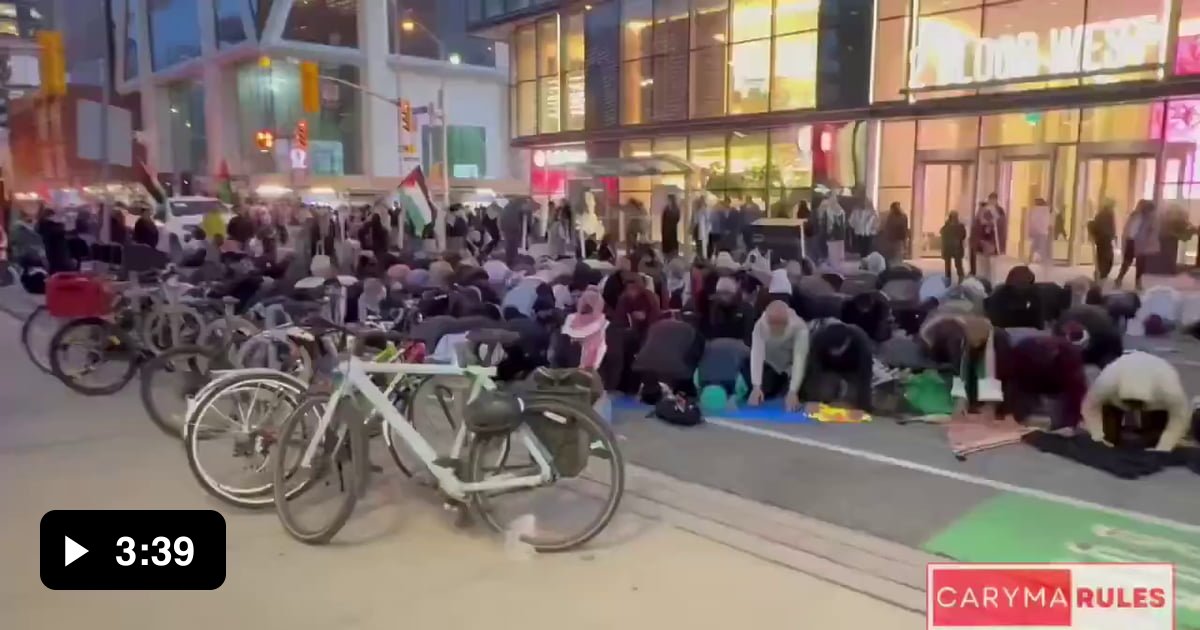
Lep prikaz zmožnosti podrejanja sobivanja v Kanadi 
 9gag.com
Canadian woman speaks out about something that would have landed her in prison in the UK - Video
1,208 points • 214 comments
In Islam, praying in the street or in public spaces is generally permissible, provided that certain essential conditions are met to ensure the prayer is valid and safe.
The primary requirement is that the ground must be clean (tahir). If the street is free from impurities, such as animal waste or other filth, it is acceptable to pray there. If the ground is suspected to be unclean, Muslims are encouraged to use a prayer mat (sajjadah), a clean piece of cloth, or even a clean leaf or cardboard to create a barrier between themselves and the ground.
Another critical condition is that the prayer must not cause harm or significant inconvenience to others. Praying in the middle of a busy road, blocking a sidewalk, or obstructing the flow of traffic is generally discouraged or disliked (makruh) because Islam emphasizes the importance of not harming others and maintaining public order. The ideal practice is to find a quiet corner or a side area where the person can pray without becoming a hazard to themselves or pedestrians.
Tole je samo prikaz moči.
Policaji bi morali to zelo na hitro počistiti iz ulice.
Vsakič.

Šok v Nemčiji
Po osmih letih se poročevalka nemške javne radiotelevizije MDR vrača v romunske vasi – in je navdušena nad novimi hišami in dragimi avtomobili. V nemških mestih pa srečuje preobremenjenost in nezadovoljne domačine.
 siol.net